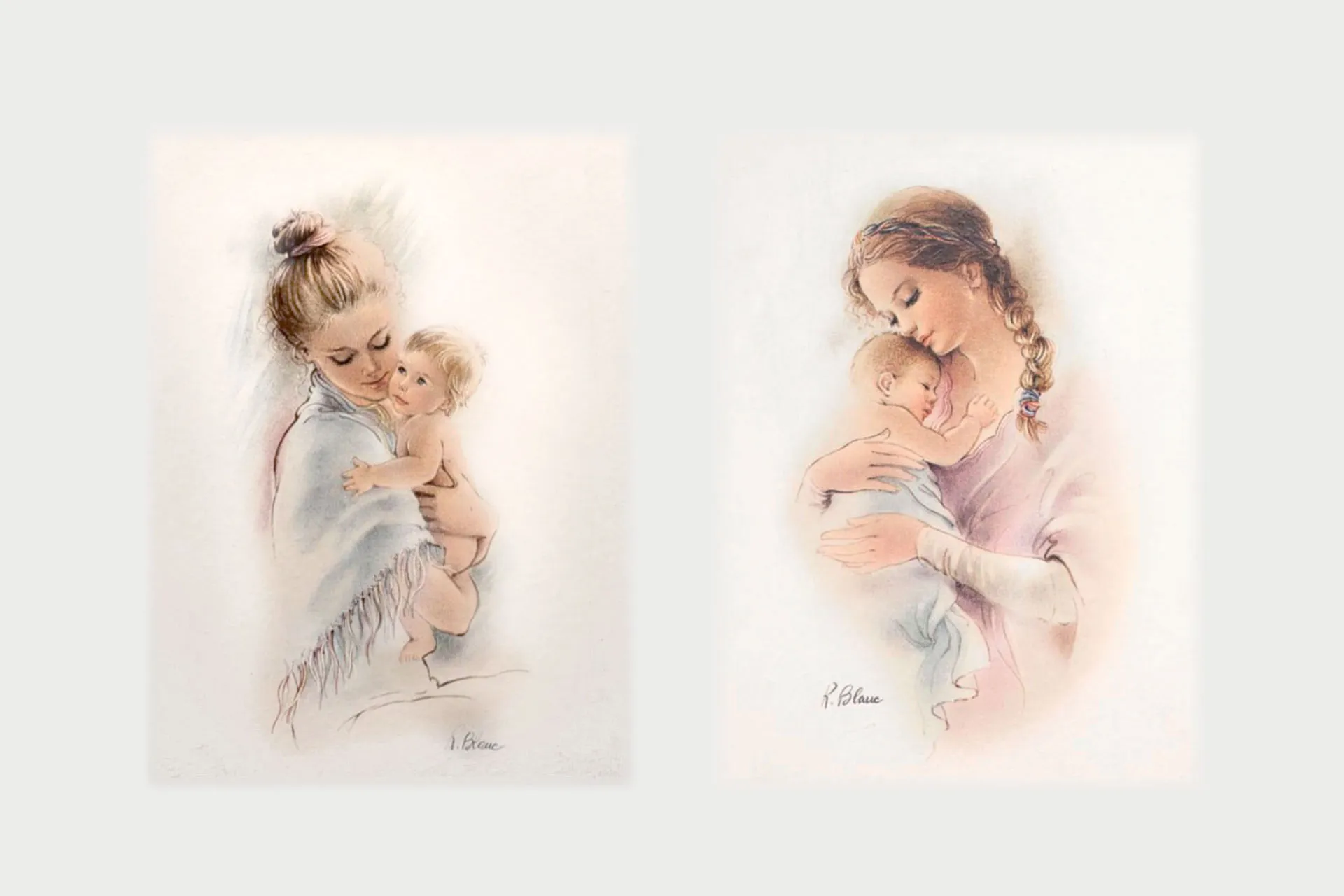

Childbirth
We believe that a woman should be able to give birth in a safe place for herself and her baby — whether in a hospital or at home — under the care of trusted professionals and together with her loved ones.
We offer the possibility to conclude a birth agreement with the midwife involved in the care.

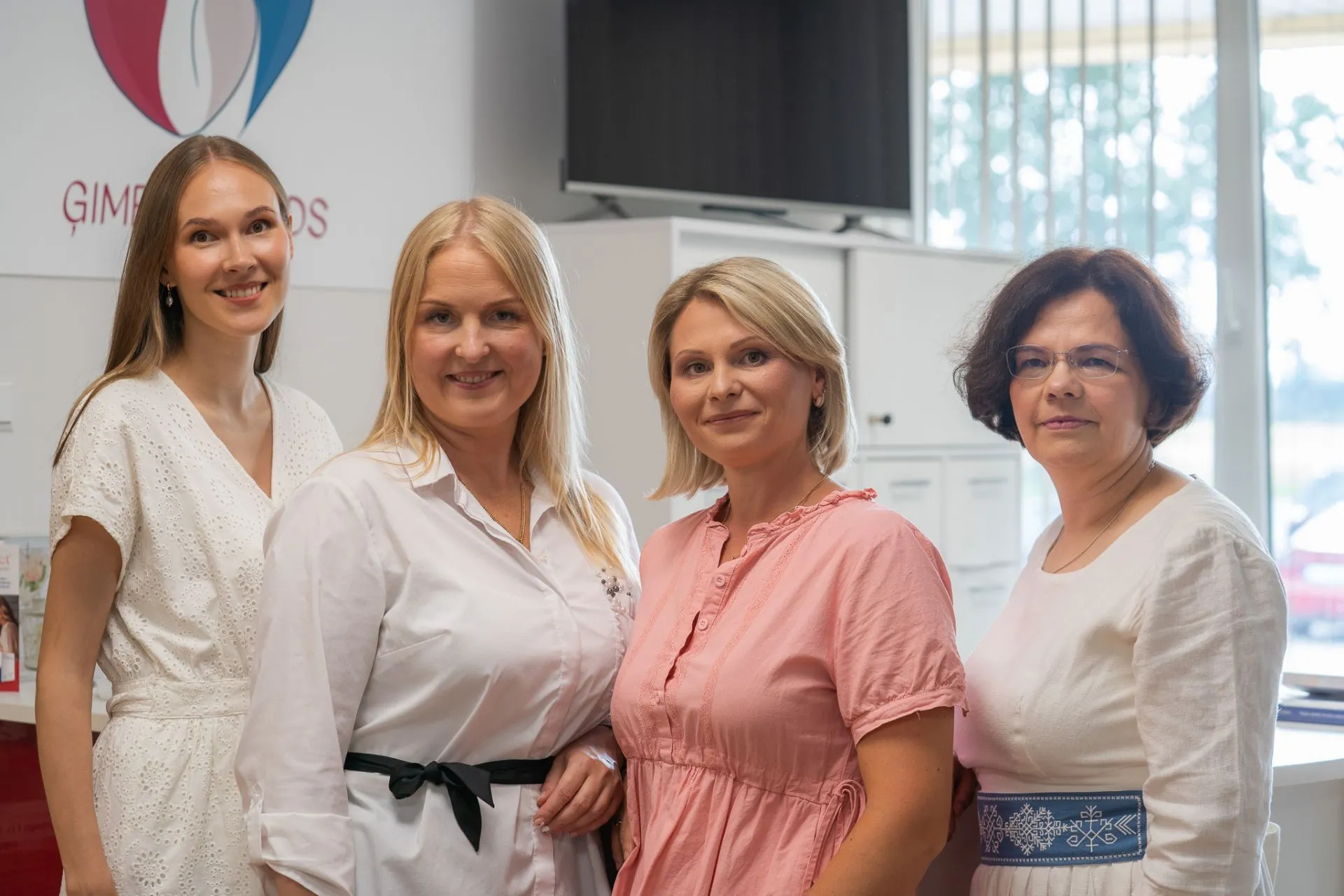
Our midwives (from left to right in the image) – Beāte Agneta Kondratjuka, Māra Grieze, Liene Drauga, Baiba Stikute – not only provide care for pregnant women, but also offer contract births in hospital (Sigulda Hospital) or home birth services.
During the postnatal period, midwives are happy to visit you at home.

Home birth
A home birth is a planned out-of-hospital birth at your place of residence, where the midwife comes to you with all the equipment required for home birthing. Home birth is only possible after signing a prior agreement, following a thorough medical and psycho-emotional assessment, as well as an evaluation of the intended birth environment.
The Essence of Birth
Birth is a life-changing event, and the care a woman receives during labour can influence her both physically and emotionally, in the short and long term. Good communication, midwife support, and compassion—while respecting the woman’s wishes—help foster a positive birth experience.
At the heart of the midwifery model of care is the woman. Birth is viewed as an inherently healthy physiological process, and the mother and baby as a unified whole. Research shows that within the midwifery care model, 85–95% of healthy pregnant women can safely give birth to their babies. This model promotes natural childbirth, and medical intervention is not part of it unless truly necessary.
When we speak about physiological or natural birth, we mean that the pregnancy has reached term (at least 37 weeks), labour begins spontaneously (not induced), and the baby is born vaginally without the use of medical instruments such as forceps or vacuum, and both mother and baby are healthy.
During planned home births, a woman is free to choose the position and location of birth—bed, floor, bathtub, or birthing pool.
Midwives attending planned home births are trained and equipped to facilitate safe home birthing and will recommend transfer to a hospital if necessary.
The Birth Environment
Familiar surroundings reduce the likelihood of medical interventions and increase maternal satisfaction with the quality of care.
The environment of a planned home birth must be adapted to the unique needs of each woman, including cultural and social considerations.
Planned home births follow the principle of continuous care—the same midwife provides care from the onset of labour until the 7th day postpartum.
Setting Up an Optimal Home Birth Environment
- Unrestricted access to sanitary facilities: shower/bath, sink, liquid soap, toilet, paper towels, electrical outlet
- Continuous supply of warm water
- Clean, tidy space
- Free movement area
- Ability to ensure privacy
- Comfortable, easily accessible bed
- Clean bedding: pillowcase, sheet, duvet cover
- Adjustable lighting: blackout curtains/blinds, suitable indoor lighting
- Possibility to increase room temperature if needed: fireplace or electric heater
- For water birth: suitable bathtub or birthing pool with disposable liner
- A clean table for midwife documentation
- Organized space for birth equipment
- Clean towels for the newborn; ability to warm them (e.g., by fireplace/heater)
- Pack of disposable underpads (60 × 40 cm)
- Optional: birth ball (65 cm), birthing stool, sling wrap
- Freedom to choose support persons—baby’s father, children, relatives, doula, or anyone the woman wishes
- Freedom to decide whether older children participate in the birth
- Personal hygiene items
Planned Actions in Case of Possible Complications
Indications for transferring the mother to hospital:
- Preterm rupture of membranes
- Vaginal bleeding
- Chorioamnionitis
- Abnormal fetal heart activity
- Meconium-stained waters
- Cord prolapse or presentation
- Intrauterine fetal death
- Primary or secondary uterine dysfunction
- Cephalopelvic disproportion
- Threatened or actual uterine rupture
- Malpresentation
- Placental abruption or retained placenta
- Birth canal trauma (except 1st–2nd degree tears or cervical tears)
- Inadequate maternal cooperation
- Mother’s request
- Other reasons posing health or life risk
Indications for transferring the newborn to hospital:
- Asphyxia
- Respiratory distress: within 2 hours—tachypnea (>60/min), use of accessory muscles, grunting
- General cyanosis or persistent acrocyanosis beyond 6 hours
- Jaundice within first 24 hours, pallor (especially if blood group/Rh conflict is possible)
- Purulent skin or mucous infections, rashes (except petechiae or erythema toxicum neonatorum)
- Neurological symptoms: lethargy, irritability, seizures, paresis/paralysis
- Gastrointestinal issues: vomiting, diarrhea, feeding difficulties
- Congenital anomalies or suspicion of them
- Conditions requiring urgent help: bleeding, arrhythmias, apnea
- Any unclear pathological condition
- Parental request
Risk Factors for Mother and Baby
Home birth is contraindicated or only possible in selected cases after consultation with the clinic’s medical director.
Maternal conditions:
- Hyperthyroidism
- Heart diseases
- Chronic kidney disease
- Type 1 diabetes
- Hypertension
- Obesity (BMI > 30)
- Significant uterine pathology
- Chronic respiratory disease
- Coagulation disorders
- Antiphospholipid syndrome
- Systemic lupus erythematosus
- Thrombophilia
- Placental abnormalities
- Gestational diabetes
- Uterine artery doppler abnormalities
- Iron-deficiency anemia
Fetal conditions:
- Oligohydramnios
- Polyhydramnios
- Intrauterine growth restriction
- Umbilical artery doppler abnormalities
- Post-term pregnancy (>42 weeks)
- Isoimmunization
- Multiple pregnancy
- Suspected high birthweight
- Congenital anomalies/aneuploidy
Other factors:
- IVF pregnancy
- Previous stillbirth (depending on cause)
- Previous placental abruption
- Previous caesarean birth
Home Birth Service and Payment Conditions
Planned home birth is only possible after signing a contract with SIA “Ģimenes Sirds”, following a face-to-face meeting with the midwife, discussion of all risks and benefits, and confirmation that the pregnancy is physiological. If any health deviations are present, an obstetrician’s approval is required.
The contract may be signed from 35–36 weeks.
The midwife may terminate the contract if circumstances arise (health changes or other unforeseen factors) that make the service impossible.
Births are registered, and a birth certificate is issued according to Latvian law.
The home birth fee is in accordance with the “Ģimenes Sirds” price list and includes:
- One home visit before birth
- Full support, management, and organisation of the birth
- Two home visits postpartum
- Newborn blood tests required by national regulations
- Vitamin K (Konakion) prophylaxis
Not included: neonatologist or other specialist consultations if needed.
Payment terms:
- €50 deposit upon signing the contract
Remaining amount payable after birth upon signing the handover document
References
-
- Buckley, Sarah J. Hormonal Physiology of Childbearing: Evidence and Implications for Women, Babies, and Maternity Care. Washington, D.C.: Childbirth Connection Programs, National Partnership for Women & Families, January 2015;
- NICE. Intrapartum care: care of healthy women and their babies during childbirth. National Institute for Health and Care Excellence. Published 2014;
- Schneck CA, Riesco MLG, Bonadio IC, Diniz CSG, Oliveira, SMJV. Maternal and neonatal outcomes at an alongside birth center and at a hospital;
- Hodnett_ED, Downe_S, Walsh_D, Weston_J. Alternative versus conventional institutional settings for birth. Cochrane Database of Systematic Reviews. 2010;
- Newburn M, Singh D. Creating a Better Birth Environment Women’s views about the design and facilities in maternity units: a national survey. The National Childbirth Trust 2003;
- Aina Meja Geskina, 2019. Vecmātes Ainas Mejas ceļvedis dzemdībām.
- Humenick S. S., 2006. The Life-Changing Significance of Normal Birth.
- Ministru kabineta noteikumi Nr.611 Dzemdību palīdzības nodrošināšanas kārtība.
- Elizabeth Davis, 2019. Heart and Hands, Fifth Edition.
- Miskova A., 2016. TIF Aktualitātes dzemdniecībā un ginekoloģijā. Riska izvērtējums dzemdībās.